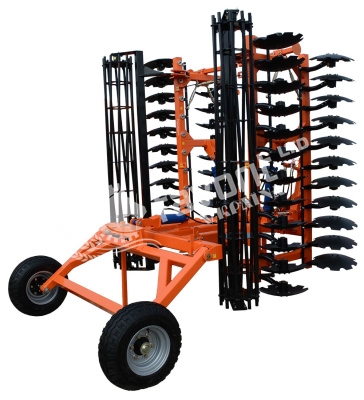
- A rotary harrow is an effective tool for preparing soil before sowing.
- It helps reduce fuel costs and increase productivity due to the speed and quality of soil cultivation.
- Rotary harrows can be used on various soil types and under different climatic conditions.
- Their design helps suppress weed development and reduce the risk of damaging plant root systems.
- Using a rotary harrow helps reduce production costs, improve product quality, and increase profitability.
Therefore, rotary harrows are an important tool in modern agriculture, helping reduce costs and increase productivity.
Viktor Marchenko, PhD in Engineering, Agroexpert (Ukraine)
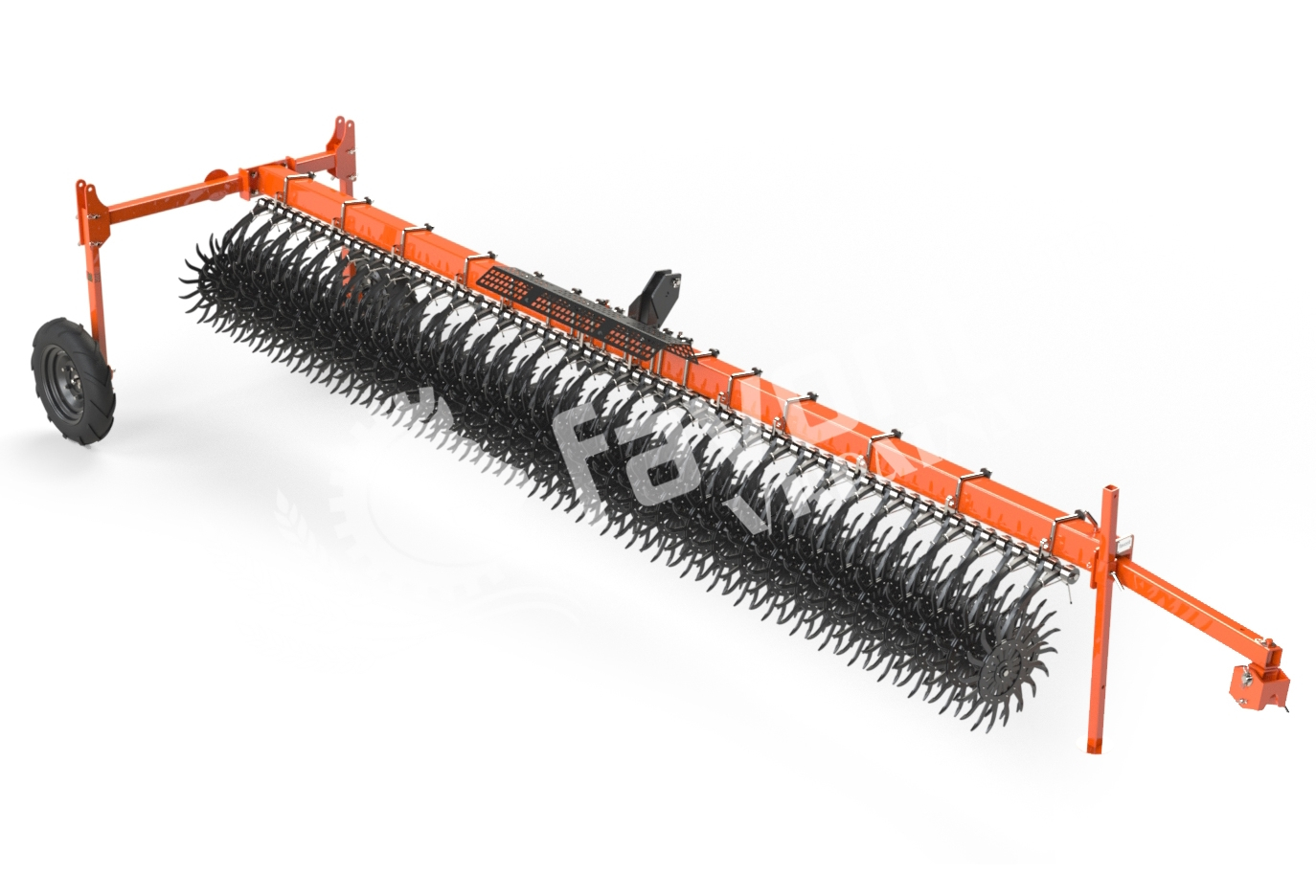
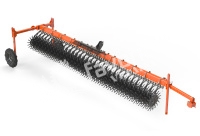
Rotary harrows are agricultural machines designed for pre-emergence field cultivation and post-emergence harrowing of cereal, row, and industrial crops in order to loosen and aerate the surface soil layer and destroy thread-stage weed seedlings.
The effectiveness of modern rotary tillage implements, which provide additional agronomic and environmental benefits while reducing energy and labor costs, is confirmed not only by the growing range of such machinery on the market but also by the rapid increase in their production by domestic and international manufacturers.
At the beginning of spring fieldwork, farmers face the important task of carrying out moisture conservation measures in time and breaking up compacted soil crust on crops. Plant roots require air for normal growth and metabolic processes. However, spring often brings insufficient rainfall. The soil warms up quickly and becomes dry. Aeration loosens the soil layer and creates air spaces that slow down soil warming.
During periods of heavy rainfall, all capillary and non-capillary spaces in the soil become filled with water. To preserve this moisture, the upper soil layer must be broken down into a fine crumb structure, disrupting the capillaries and thereby preventing moisture evaporation. Moisture reserves become an important factor supporting the development of plant root systems and, consequently, creating the foundation for high-quality crop formation. To achieve this, farmers harrow the soil using rotary harrows, which effectively mulch the upper soil layer, break up soil crust, create favorable conditions for the initial development of plant root systems, and provide a strong start for plant growth.
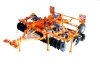
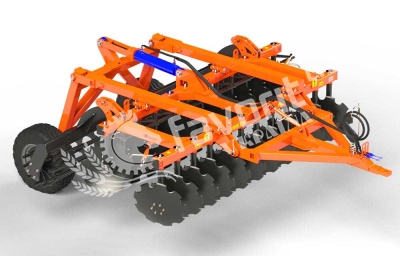
Rotary harrows belong to the category of tillage machines with passive working elements. Their tasks include loosening the surface soil layer, breaking up clods and lumps, partially leveling the field surface, mixing soil layers, incorporating fertilizers into the soil, and harrowing.
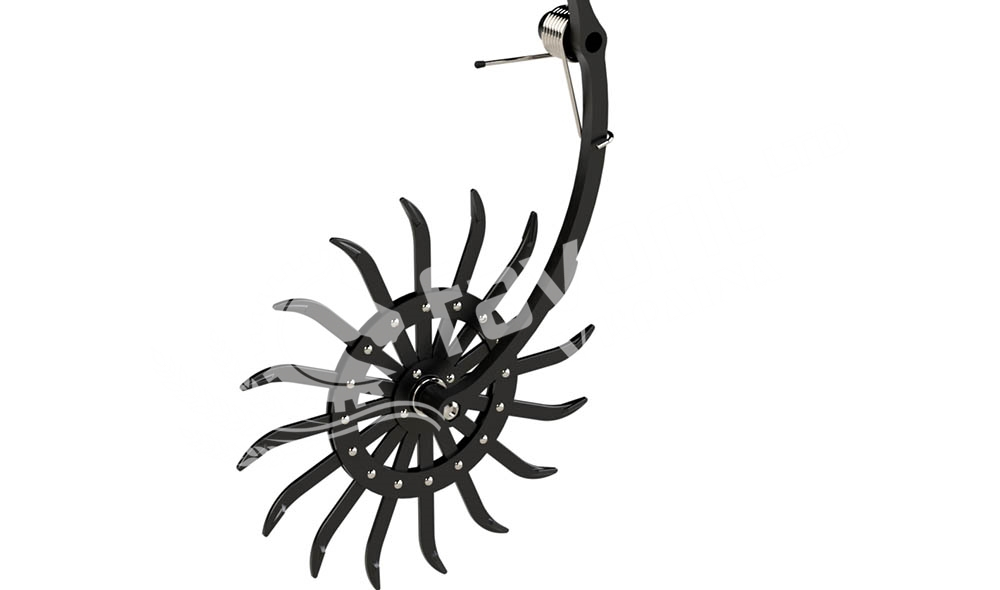
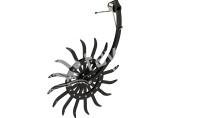
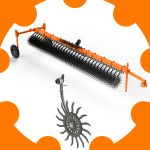
The main working elements of a rotary harrow are spike wheels, which may vary in shape - petals, spikes, blades, and other designs - and diameter depending on the manufacturer. Working elements in the form of spike discs are widely used both in single-operation and combined implements.
If we consider why rotary harrows are used more often than tine harrows, the answer is clear - they are less aggressive toward young crops. When comparing losses of young seedlings after machinery passes over the field, rotary harrows cause less damage. The operating principle is that when minimal soil disturbance is required, for example to break the surface crust while preserving crops or stubble, the discs are positioned so that they work with their reverse side. In this position, when the spikes enter the soil, their convex side faces opposite the direction of travel.
A rotary harrow works as follows: as the machine moves across the field, the spike wheels rotate and penetrate the soil to a specified depth, usually from 3 to 8 cm. This breaks the soil crust and aerates the soil. A kind of micro-explosion occurs - the soil is lifted and then falls back as a loose layer between the crop rows. It is also important to maintain proper crop density so that machinery can move freely between rows and plant losses are minimized.
As the spike disc operates, nitrogen contained in the air penetrates the fertile soil layer. The harrow mixes not only the soil layers but also air with the soil. This contributes to the natural enrichment of the soil with nitrogen. The use of a rotary harrow can help reduce the amount of nitrogen fertilizer applied and, in some cases, may even eliminate the need for it.
In fact, a rotary harrow performs many of the same functions as a tine harrow, but its advantage lies in the targeted action of its working elements on the soil crust. This makes it possible to use rotary harrows on young crop seedlings at the 2-3 leaf stage.
This means that rotary harrows damage significantly fewer cultivated plants than tine harrows while still achieving the required objective - breaking soil capillaries and conserving moisture. In addition, timely harrowing can help reduce or even eliminate the need for herbicide application, as these agricultural machines operating at high speeds destroy weeds at the white-thread stage.
Source: Agroexpert